
.png)





Student 10-Minute Paper
Medical, Urban, and Veterinary Entomology
Student Competition
Student
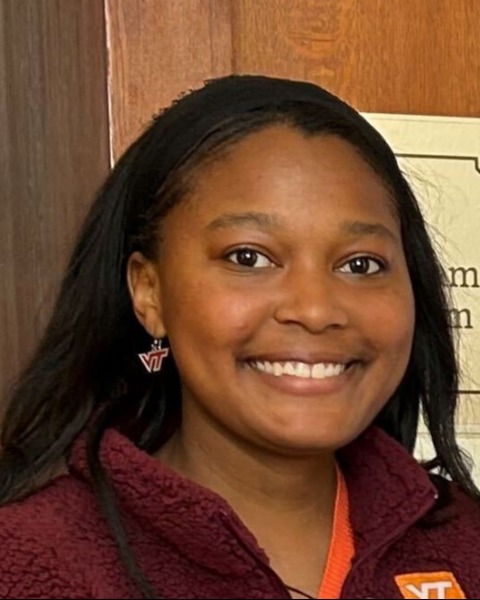
Shajaesza Dhakhai Diggs (she/her/hers)
Master's Student
Virginia Tech
Blacksburg, Virginia
Mark Stremler
Professor
Virginia Tech
Blacksburg, Virginia
Jake J. Socha
Samuel Herrick Professor
Virginia Tech
Blacksburg, Virginia
Chloe Lahondere
Assistant Professor
Virginia Tech
Blacksburg, Virginia
Clement Vinauger
Associate Professor
Virginia Tech
Blacksburg, Virginia
To obtain the carbohydrates required to sustain their metabolism, mosquitoes imbibe various fluids, from plant nectar to honeydew, and tree sap. In addition, females of some species require blood meals from vertebrate hosts for egg production. Mosquitoes thus feed on fluids with a wide range of physical properties, including granulometry, temperature, and viscosity. Despite the epidemiological importance of their feeding behavior, there has been very little investigation into how mosquitoes are able to feed on such a broad range of fluids. In particular, whether biomechanical constraints are preventing nectar-feeding mosquito species from transitioning to blood-feeding remains to be determined. In this context, we hypothesized that the activity and properties of the feeding pumps constrain the types of fluids a mosquito can ingest. To test our hypothesis, we fed mosquitoes on sugar solutions varying in viscosity while conducting electromyography (EMG) recordings of the cibarial and pharyngeal (i.e., feeding) pumps. We compared males and females of two mosquito species: Aedes aegypti, which feeds preferentially on human hosts, and Culex quinquefasciatus, which feeds primarily on birds. Our findings indicate that each species has evolved different strategies to cope with variations in fluid properties. Results will be discussed from a biological and ecological standpoint, as it may have important implications for the development of new strategies for controlling mosquito-borne diseases by targeting the feeding behavior of mosquitoes.